FAST ROPE / F.R.I.E.S. TECHNICAL SPECIFICATION
Parameter / Requirement
FAST ROPE

Diameter: Nominally 44 mm
Construction: Eight strand cross plait
Material: Spun staple nylon to QA26:258
Colour: Olive Drab
Weight measured at zero tension (kg/100m): 94 kg
Weight measured at BS EN 919 reference tension (kg/100m): 68 kg
Average rope breaking strength: 11.000 kg
Minimum rope breaking strength spliced or with
anonized black
aluminium conical fitting: 7.600 kg
Typical extension zero load to BS EN 919 reference tension of 200 kg: 30 %
F.R.I.E.S. - LOOPS

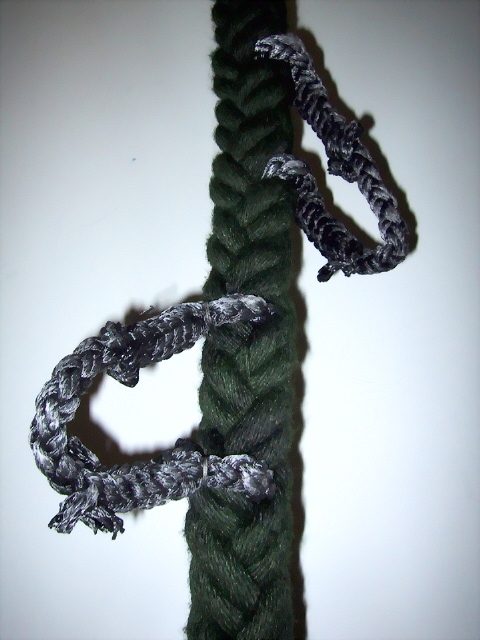
Diameter: Nominally 12 mm
Construction: Eight strand cross plait
Material: Nylon to BS EN 696
Colour: P.U. coated black
Weight measured at zero tension (kg/100m): 9,40 kg
Minimum breaking strength of rope: 3.000 kg
TERMINAL OPTIONS (Minimum tensile strength)
High Technology Aluminium Fitting: 7.600 kg
Soft eye splice: 7.600 kg
FAST ROPE / F.R.I.E.S. LIFE & CARE
The British Ministry of Defence do not, as far as we are aware, recommend a
maximum number of descents on Fast Ropes.
Subject to other factors (such as
abrasion damage) the rope may be suitable for up to 200 x 3 man descent in
training.
In operational use the rope may be subject to five men simultaneously
in extreme circumstances, however this method of
operation is not recommend.
Recommend lifting policy, calender/usage?
Man made fibres such as nylon possess good shelter life provided they are
stored in dry conditions at ambient temperatures
and are shielded from
ultraviolet light. Also air circulation is important as well as keeping the
ropes above floor level so that
dust accumulation, other foreign matter and
dampness are not sustained. The ingress of small particles can cause inter yarn
abrasion leading to the rope breaking down from the inside. There is no
threshold time from which degradation will occur since
it is a continuous
process starting from the day of raw material is manufactured. If a nylon rope
is kept in the said conditions,
it is expected that a negligible loss of
performance will be observed within a five year period. Rope must not be stored
in the
same vicinity a chemicals, fuel etc. Nylon is particularly suspectible to
acid (batteries for example).
It is not possible to give a definite number of descents because of the
number of unknowns that is involved. However if the rope
is always used, stored
and cared for correctly then the most likely reason that the rope would be
rejected is through external
abrasion from excessive use. A good indication of
life can be estimated from a plot of number of descents versus residual
breaking
strength.
Effect on operation and acceptable level of glazing?
Surface glazing will effect the strength of the rope, the speed of descend
and may enable it unpleasant to use. If the glazing is
slight, that is, not in
continuous sections of the rope longer than a few inches or penetrating the
depth of the rope by more than
0,5mm then it will be reducing the strength of
the rope, but may be still usable subject to their inspection criteria. A
concerning
degree of glazing would be continuous glazed sections of longer than
a few inches and where glazing depth is more than 0,5mm.
Slight glazing may
reduce the friction of the rope thereby increasing descent speed. Also, the rope
may be brittle and uncomfortable
to the user.
Acceptable level of fraying?
When a rope is first deployed, abrasive surfaces will cause the outer
filaments of the rope to form a fuzzy surface apparence and
texture. This is the
result if these filaments breaking. The roughened surface actually forms a
protective cushion and shield for the
fibres underneath. This helps retard
further abrasion and damage to the sub surface fibres. This condition should
stabilize, not progress.
If surface roughness increases, excessive abrasion is
taking place and strength is being lost. Where a strand has damage as opposed
to
an invidual yarn, then this is more serious. Certainly a rope with a complete
sever of one strand should be discarded immediately
irrespective of the
condition of the rest of the rope.
Storage conditions on and off aircaft?
Temporary storage conditions on an aircraft or otherwise, whereby the rope
will possibly be subjected to direct ultra violet light or rain
when
operational, are not likely to affect the 5 year performance of the rope. The
amount of time the rope will be spent in these less
than ideal conditions, for
example on the tarmac of a Middle East airport, amounts to a small proportion of
its 5-year shelf life.
Prolonged contact of ropes with bare iron surfaces that
are likely to rust should be avoided. Iron rust reacting with sea water is
reported to cause a very high loss in the breaking strength of nylon ropes in
one month.
Drying conditions and methods?
A dirty rope can be washed in a tepid mild detergent solution such as Fairy
Liquid. The rope when immersed can be gently agitated.
It should then be
thoroughly rinsed in clean (fresh) water and allowed to dry naturally. Under no
circumstances should a mechanical
wash and dry method or artificial heat be
applied.
OPERATIONAL EFFECT OF SHRINKAGE
Shrinkage occurs for two reasons in nylon:
1. Relaxation
When a rope is loaded and the load is removed the rope relaxes and becomes
shorter irrespective of how small the load is. This
relaxation theoretically
continues indefinately, but in practice it becomes unnoticeable after a given
period. Ropes will relax in this
way after they have been produced because of
the forces involved in manufacturing the rope around machinery such as a haul
off
pulleys etc. A rope that is manufactured at a length of 20 metres, can be
packed, shipped off to its destination and arrive 0,5m
shorter without any additional loading. The more extensible the rope the more
pronounced this effect will be.
Measuring rope length is subjective because a rope is only a particular
length at a given load. If one person measured a Fast Rope
at hand tension the
length arrived at would be different from that observed by another person
because interpretation of hand tension
is likely to be different. Fast Rope is
the perfect rope to show this effect because it is the most extensible
available. To overcome this
problem, properties of ropes are measured at
reference loads (these problems are apparent for other properties as well such
as diameter,
weight, extension etc.)
The British Standards Reference Load is represented by the following
expression and unless otherwise stated is the reference tension
used in the rope
making industry:
R.L. = Diameter2/8....(kg) (diameter is in mm)
So for an 8mm diameter rope all measurements are taken when the rope is
loaded to 8 kilograms.
A shrunk rope caused by normal loading and due to a damp atmosphere or a wet
rope that has dried is not a problem. The noticeable
effects are that the rope
will stretch more on its next loading after having shrunk. There should be no
strength loss due to a rope shrinking
if it is loaded later in a dry condition
or if it has relaxed due to a normal loading pattern.
2. Hydrolysis
Nylon reacts negatively with water losing up to 15% of its strength
immediately upon becoming wet. Water is absorbed by nylon and the
forces
involved in the absorption cause the yarns to constrict and ultimately reduce
the length of the rope. This will occur from the humidity
in the natural air as
well as a thorough soaking.
Recommended maintenance?
The ropes should be clean and free from dust and other small particles as
these can penetrate the rope and cause reduced life. The ropes
can be washed and
dried as peviously described.
Cyclic Loading
Method:
A Fast Rope attached to a Marlow End Fitting was cycled between 0 and 750
kilograms 200 times at a rate of approximately 3 inches per
minutes.
Result:
No visible movement of the white safety mark or any visible deformation of
the rope or fitting was noticed. The rope with a fitting was taken
to break
point on the 201st loading under which failure was achieved at 10,98
tonne thereby still achieving the quaranteed new minimum
breaking load of 7,6 tonne.
When the rope looks like this after heavy usage, please watch out!
